
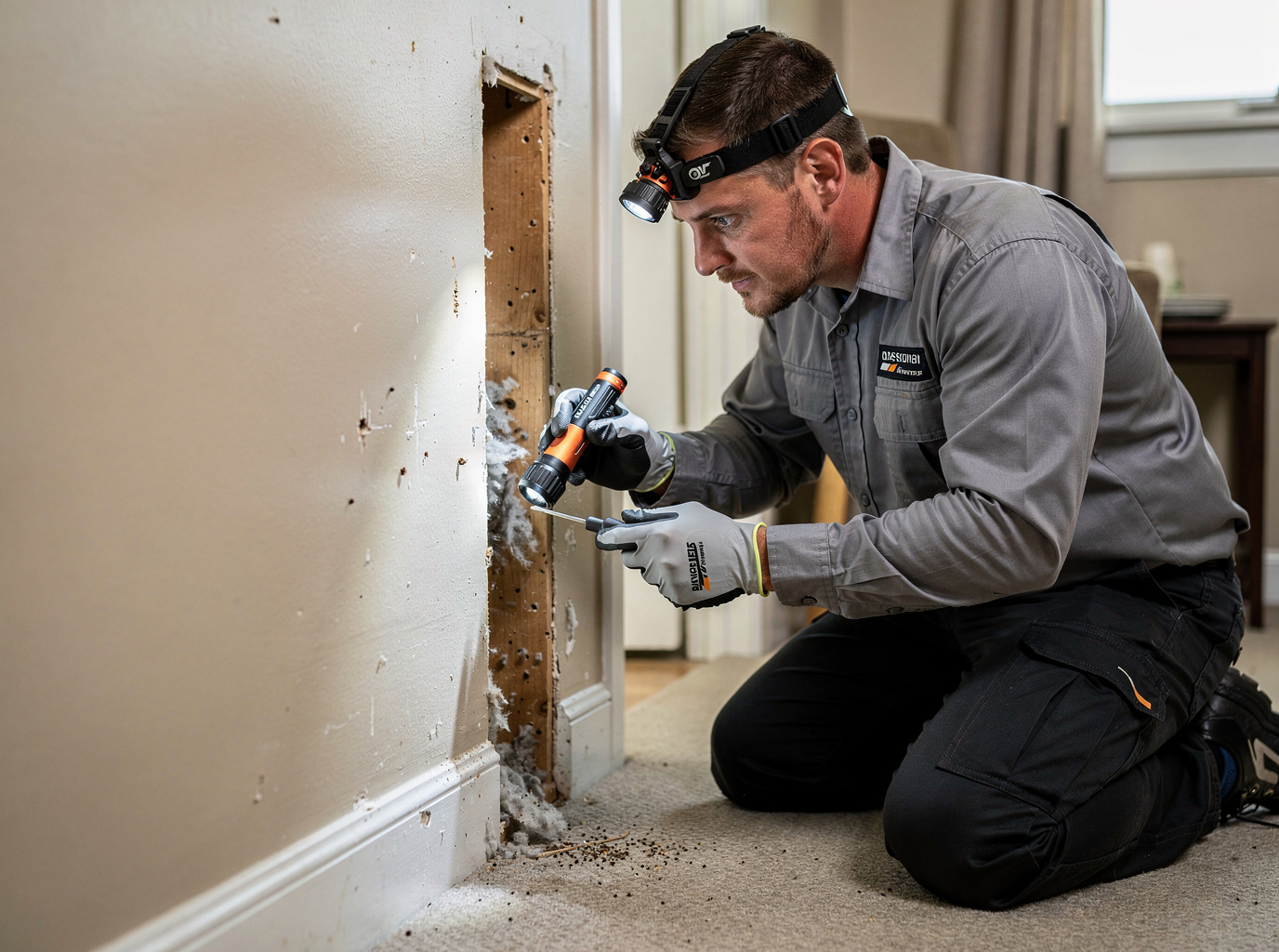
Joplin's older homes in Downtown Joplin and North Joplin often feature plaster-and-lath walls with gaps around plumbing and electrical runs that mice exploit after spring storms. These storms bring high winds and heavy rain that widen foundation cracks and dislodge soffit material, creating new access points rodents use to reach wall voids. Technicians at Joplin Rodent Guard start by mapping active runs with tracking powder and listening devices rather than relying on visible droppings alone, because mice can travel between floors without leaving surface evidence in these structures.
Once entry points are identified, crews use copper mesh and expanding foam rated for exterior use to seal openings around utility penetrations common in Jasper County homes built before 1960. Interior wall work includes placing secured bait stations inside voids through small access holes that are later patched, avoiding the need to open entire sections of drywall. This method accounts for the area's clay-heavy soils that retain moisture and encourage mice to seek shelter indoors during humid periods.
Homeowners in nearby Carthage and Webb City sometimes discover mice have nested in insulation after roof leaks from severe weather, requiring removal of contaminated material before sealing. Joplin Rodent Guard checks attic and crawlspace connections because wall infestations frequently link to these spaces through chaseways. Follow-up visits focus on confirming no new activity rather than repeated baiting, since the primary goal is exclusion in storm-prone Jasper County housing.
Technician insight
In Joplin, the thing that catches most people out with Mice in Walls is how spring storms push mice into wall voids through soffit gaps on homes built before 1960 in Downtown Joplin and North Joplin. The clay soils hold moisture so rodents stay inside longer, and many homeowners only treat the attic while ignoring the vertical chaseways that let mice move between floors.
North Joplin Two-Story With Storm Damage
Mice were entering a 1940s home after wind lifted a section of aluminum soffit during a March storm. Tracking showed runs traveling from the foundation up through a plumbing chase into second-floor walls. Crews sealed the soffit and foundation gaps with copper mesh, placed stations in the chase, and removed soiled insulation from one wall cavity. Activity stopped after the second check.
Mice in Walls Services We Offer
✓Wall Void Inspection
Uses tracking powder and inspection cameras to locate active mice runs inside plaster and drywall cavities common in Downtown Joplin homes.
✓Entry Point Sealing
Applies steel wool, copper mesh, and exterior-rated foam to close gaps around pipes and wires that storms have widened in North Joplin properties.
✓Interior Bait Station Placement
Installs secured stations inside wall voids through minimal access points, reducing the need for large drywall cuts in older Jasper County houses.
✓Contaminated Insulation Removal
Extracts mouse-nested insulation from wall cavities after roof leaks, then replaces with new material to restore thermal performance.
✓Chaseway Blocking
Seals vertical plumbing and electrical chases that connect wall voids to attics in pre-1960 Joplin homes to stop vertical mouse travel.
Mice in Walls Cost in Joplin, MO
| Service | Typical Range | What Affects It |
|---|---|---|
| Wall inspection and mapping | $175–$350 | Higher when multiple stories or insulation removal required |
| Entry sealing package | $250–$600 | Depends on number of penetrations and exterior height |
| Full mice in walls treatment | $400–$850 | Includes stations, sealing, and one follow-up |
Ranges are typical for Joplin, MO and confirmed with an exact written quote before any work starts.
How it works
- 1
Initial Site Walk
Technician examines exterior foundation, soffits, and utility entries around the Joplin property for storm-related openings.
- 2
Void Mapping
Places tracking powder and uses listening tools to identify active runs inside walls without unnecessary demolition.
- 3
Exclusion Work
Seals identified entries with durable mesh and foam, then places secured bait stations inside voids.
- 4
Follow-Up Check
Returns after 10-14 days to confirm activity has stopped and adjust any stations if needed.
Pricing
Costs vary by number of active walls and extent of storm damage; inspection determines final scope.