
2026-09-18 · Tom Harlan
How Do Mice Get Into Homes in Joplin?
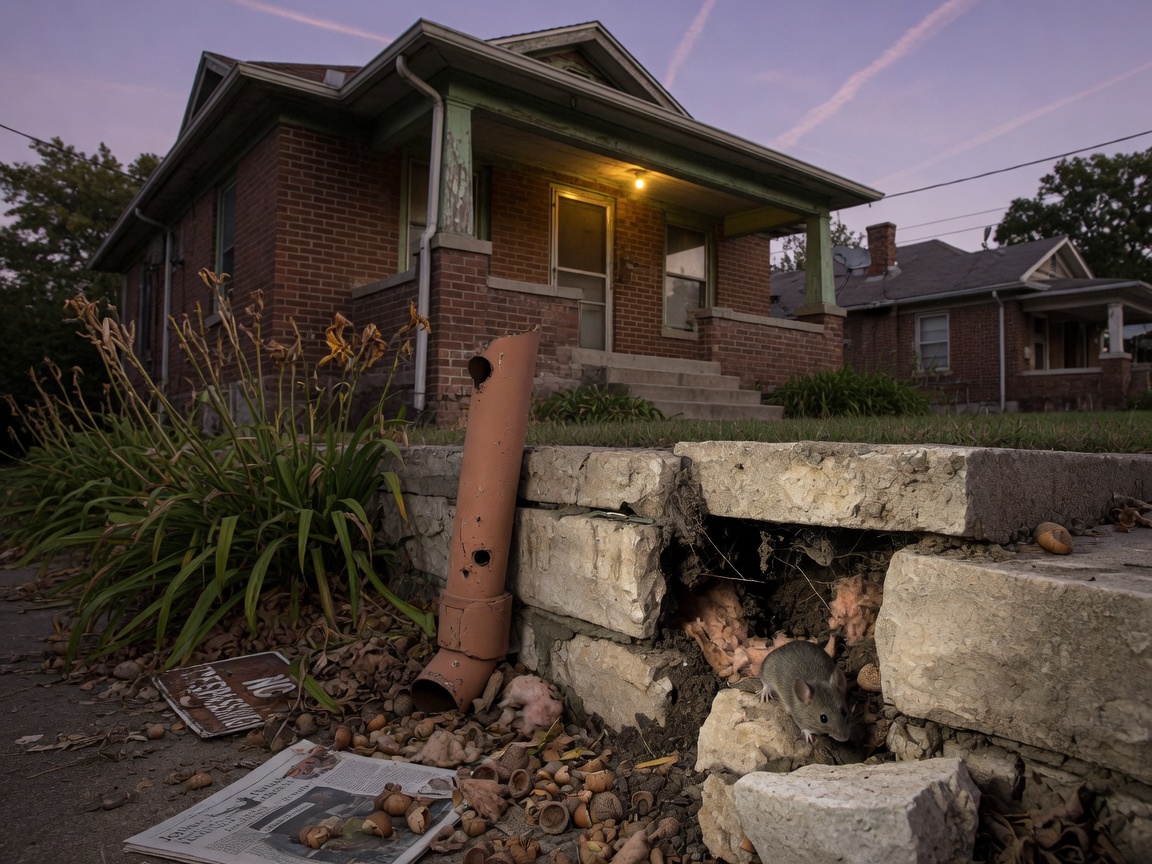
Mice enter Joplin homes through gaps as small as a quarter inch in foundations, around pipes, and under eaves, especially after severe spring storms tear roof shingles or loosen siding in Jasper County housing stock.
Foundation and Crawl Space Gaps
Older homes in Murphysburg and Downtown Joplin often sit on limestone foundations laid before 1950. Settling soil and repeated freeze-thaw cycles open cracks wide enough for house mice. Severe spring storms dump heavy rain that erodes soil under porches and adds hydrostatic pressure against basement walls, widening those same cracks. In North Joplin, many 1920s bungalows have crawl spaces with dirt floors and no vapor barriers; mice follow utility trenches from the street straight under the floor joists. Homeowners notice droppings first near water heaters because the rodents follow the warmth and moisture. Sealing requires steel wool backed by caulk or metal plates rather than foam alone, since mice chew through foam within weeks.
Roof and Attic Entry After Storms
Joplin’s humid subtropical climate brings straight-line winds that peel asphalt shingles and dislodge ridge vents on homes near Route 66 Carousel Park and Schifferdecker Park. Once the underlayment tears, mice climb the downspouts and enter the attic through the exposed sheathing. In Webb City and Carthage, where many homes share the same pre-war construction, soffit vents often lack proper screening after decades of weathering. Mice chew the existing mesh or push through gaps where fascia boards pull away from the rafters. Insulation in these attics then becomes nesting material, and the rodents travel down wall cavities to kitchens. Regular inspection of attic vents after each March or April storm line prevents most roof entries.
Utility Penetrations and Garage Doors
Homes in Iron Gates and Rosedale frequently have exterior spigots, dryer vents, and electrical service entrances that were never properly flashed when the houses were built. Mice follow the pipes through the rim joist because the original mortar or brick has crumbled. Garage doors in multifamily properties along North Heights often sit a half inch above the concrete, allowing mice to run under the weatherstrip at night. In restaurants and commercial buildings near the Joplin Museum Complex, grease-laden exhaust fans create warm entry points that stay open year-round. Steel kick plates and heavy-duty door sweeps close these routes more reliably than rubber seals that rodents simply gnaw.
Seasonal Patterns and Neighboring Cities
Activity spikes every October as temperatures drop and mice move indoors from fields surrounding Carthage and Carl Junction. Spring storms then create new openings that the same mice exploit by April. Property managers in Royal Heights and Blendville South see recurring issues because shared walls and common attics let rodents travel between units without ever touching the ground. Checking for fresh gnaw marks on exterior corners and listening for scratching in walls after storms gives the earliest warning. Exclusion work focused on these documented entry points stops most new invasions before they reach the living spaces.