
2026-09-18 · Tom Harlan
Why Do I Hear Scratching in My Walls at Night?
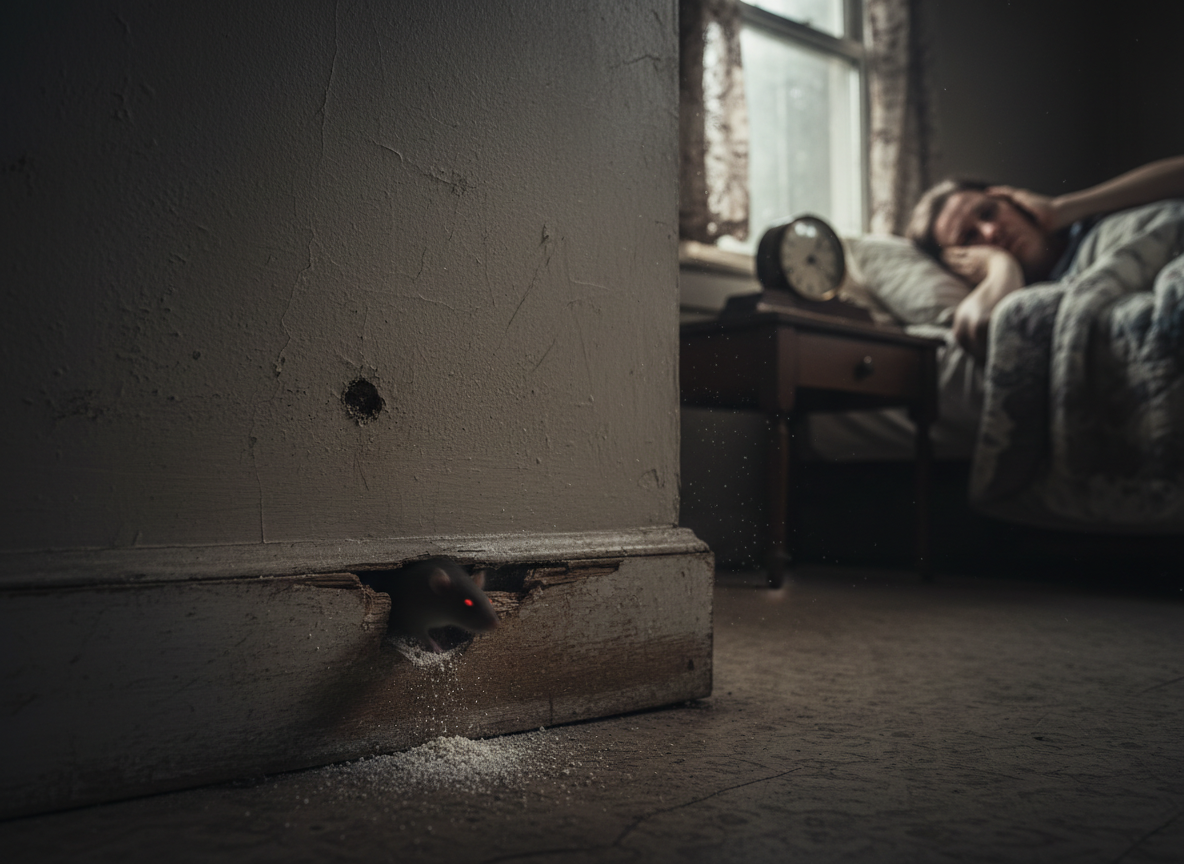
Scratching sounds at night in Joplin homes most often come from mice or rats moving through wall voids and attic spaces. These rodents stay active after dark when the house quiets down, and their claws against drywall or insulation create the distinct noise many residents hear between 10 p.m. and 4 a.m.
Why Joplin Housing Stock Attracts Rodents
Many homes in Downtown Joplin and North Joplin date back to the early 1900s through 1950s, with plaster walls, balloon framing, and crawl spaces that give rodents easy travel routes. Gaps around pipes, vents, and foundation cracks in these older structures let mice slip inside during spring storms common to Jasper County. Once inside, the animals follow the same paths nightly, producing the scratching that travels through walls. Nearby towns such as Carthage and Webb City share similar older housing, so the same pattern appears across the region. Rodents also exploit the humid subtropical climate that keeps soil moist and encourages insects, which in turn draws mice looking for food.
How Local Weather Drives Nighttime Activity
Joplin’s severe spring storms push rodents indoors when heavy rain floods yards and outbuildings. After storms pass, mice and rats seek dry shelter in wall cavities and attics, increasing movement at night. Summer humidity keeps insect populations high, supplying a steady food source that supports larger rodent numbers. In winter, cold snaps drive the same animals deeper into heated wall spaces for warmth. Residents in North Joplin often notice the scratching intensify right after the first hard freeze or after a line of thunderstorms rolls through.
Signs the Noise Comes from Mice or Rats
Mice produce lighter, faster scratching while rats create heavier, slower sounds that may include gnawing on wires. Droppings the size of rice grains near baseboards point to mice; larger, capsule-shaped droppings indicate rats. Both leave grease marks along walls where their fur rubs during repeated travel. In Joplin homes, these signs often appear first in kitchens or laundry rooms because those rooms offer water and crumbs. If the sounds continue for more than a few nights, the animals have likely established a route between the exterior and an interior void.
Steps to Confirm and Address the Source
Start by placing a few snap traps or live traps along suspected wall runs after dark and check them each morning. Listen for activity with a stethoscope or phone app placed against the wall to pinpoint the exact height and location. Seal obvious exterior gaps with steel wool and caulk once you confirm the entry points. For persistent cases, scratching noises in walls and mice in walls services focus on exclusion work that blocks routes without leaving openings for new rodents. Review the article on signs of a rodent infestation to compare additional indicators before deciding on next steps.
Preventing Return Trips Through Joplin Homes
After initial removal, focus on eliminating food and water sources that keep rodents coming back. Store pet food in sealed bins, fix leaky pipes under sinks, and keep garbage cans covered. Trim vegetation touching the house so rodents cannot use branches as bridges to rooflines. In Jasper County, where spring storms recur yearly, recheck foundation vents and soffits each March for new gaps created by wind-driven rain. Homeowners in areas like Murphysburg and Blendville South report fewer repeat issues once they combine sealing with regular monitoring. The post on rodent damage to electrical wiring explains why early action also protects older homes from fire hazards caused by chewed lines.